



Unless otherwise noted, all bold emphasis is solely attributable to LifeWise Exposed.
Across the country, school boards are confronting the spread of LifeWise Academy — an Ohio-based program that removes public school students out of class for off-campus Bible study known as release-time religious instruction (RTRI).
While LifeWise promotes its efforts as “character education,” school districts in Ohio to Kentucky to West Virginia to Washington and beyond have said no to the national RTRI program — when legally permitted — citing concerns over academic disruption, constitutionally required school district neutrality, and the erosion of home rule.
But in Ohio and other states, state-mandated RTRI policies have ultimately turned those local rejections upside down.
LifeWise falsely claims “zero programs lost”
LifeWise has repeatedly claimed publicly again and again they have “zero programs lost.”
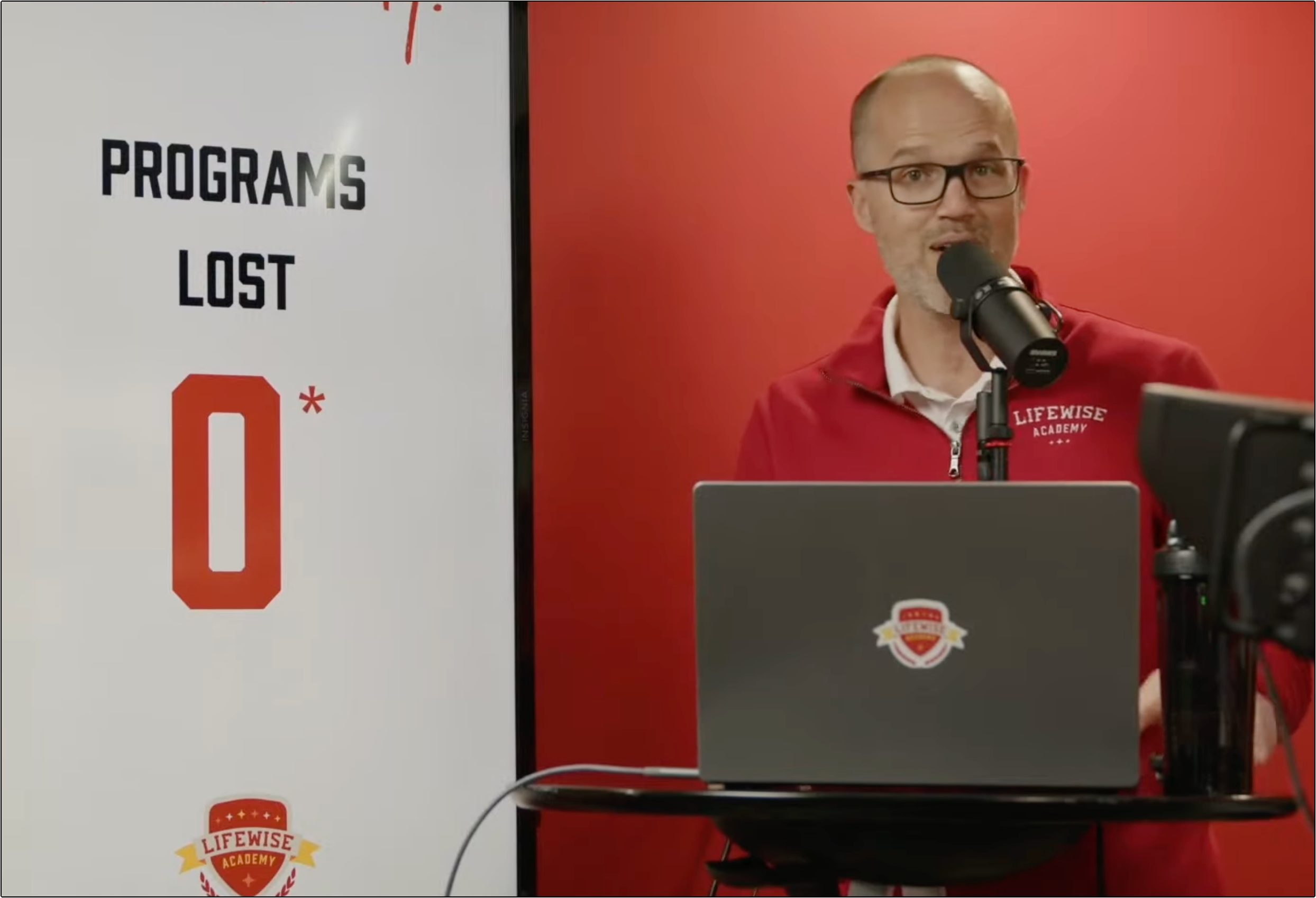
However, LifeWise has been rejected and declined by multiple public school districts across multiple states.
Ohio
LifeWise shutters its Eaton, Ohio after school program
An after school LifeWise program operated in Eaton, Ohio from September 2021 until April 2024 when it was shut down.

Read more here about the LifeWise Eaton after school program.
Westerville school board unanimously rejects LifeWise
In October 2024, the Westerville City Schools Board of Education voted 4–0 to rescind its RTRI policy permitting LifeWise Academy to remove public school students for Bible classes.
Westerville school board president Kristy Meyer explained:
“I have significant concerns about the disruptions caused by pulling kids out of school during the middle of the day.”
Westerville resident Dr. Allison Baer, an education professor and parent, questioned the wisdom of devoting school time to private religious instruction.
“I was raised to know that religious teaching belongs in the home, at the church, with your friends, with your family, and those various people that believe the way you do… If this program, and this teaching, is so vital to their Christian life, why isn’t it offered after school, which would help working parents with free after school child care?”
LifeWise CEO Joel Penton spoke, emphasizing parental rights and called the decision “disappointing,” accusing the district of denying “hundreds of students access to Bible-based character lessons during the school day.”
After Westerville school board rescinded its RTRI policy, LifeWise put out a video entitled The Canceling of LifeWise Academy:
Entire Worthington school board votes to rescind LifeWise
In December 2024, Worthington City Schools followed Westerville’s lead, voting 4–0 to rescind its RTRI policy.
School board member Jennifer Best summed up the concern:
“I just see it growing and getting out of hand.”
The district emphasized local control and the need to keep academic time intact, even as LifeWise pressed for reinstatement.
Penton criticized the decision, saying LifeWise was “incredibly disappointed” and urging state lawmakers to mandate access to all districts — a request that, within months, would be fulfilled.
Ohio lawmakers override local school boards’ RTRI policy home rule
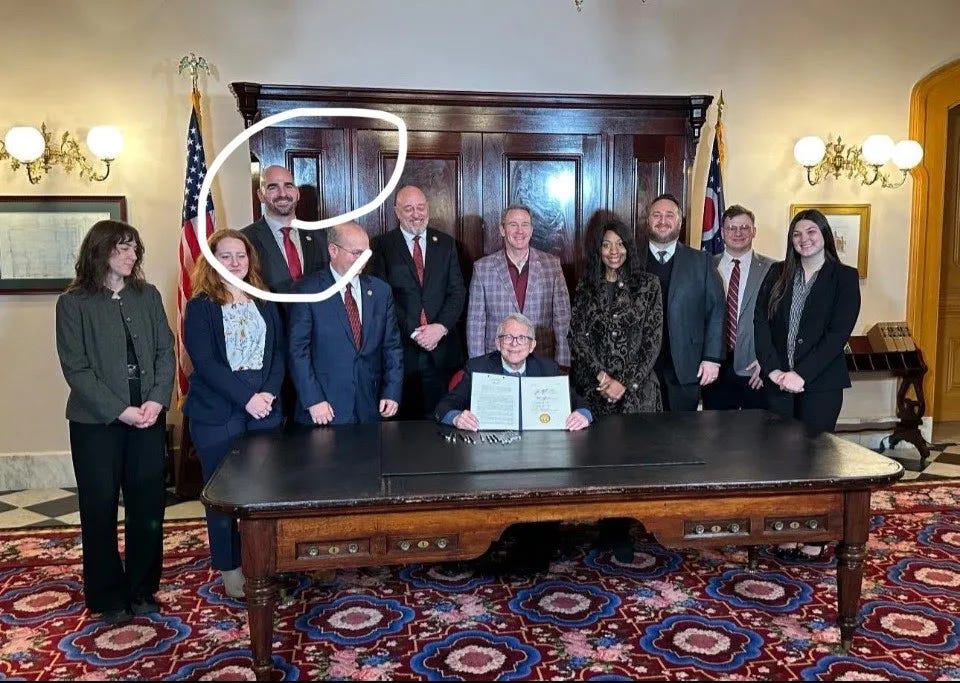
In late November 2024, Ohio lawmakers advanced two bills — House Bill 445 and Senate Bill 293, drawing both opposition and support — that would require all public school districts to allow students to be released during the school day for religious instruction.
The legislation effectively nullified home rule decisions in districts like Westerville and Worthington, which had voted to end RTRI programs operating in district, and prevented districts from saying no to RTRI all together.
As Ohio Capital Journal columnist Marilou Johanek reported, the bills “strip districts of the right to refuse questionable programs or to make their own policies about excusing students during school for extracurricular religious instruction.”
The change transformed what was once optional local policy into a mandate allowing RTRI programming in public schools across all of Ohio.
At the center of the lobbying push was LifeWise CEO Joel Penton, identified by Johanek as “the biggest lobbyist campaigning for passage” of the new legislation — part of a broader national effort to expand religious influence in public schools.
Under this new law, districts like Westerville and Worthington — both of which had previously rescinded LifeWise — are now compelled to allow religious release programs if community organizers request them.
Following the “shall” mandate, Worthington would reinstate its RTRI policy 5223 in March 2025.
Kentucky
Warren County public schools reject LifeWise
In August 2025, the Warren County Public Schools Board narrowly voted 3–2 against LifeWise’s proposal to take elementary students to a nearby church for Bible lessons.
The debate came on the heels of Kentucky’s new Senate Bill 19, which permits “moral instruction” programs during school hours. Despite state authorization, Warren County’s board balked at implementing it, citing confusion over the law and concern over precedent.
LifeWise’s local director told reporters the group would return with another proposal.
Oldham County unanimously votes against LifeWise
The Oldham County School Board unanimously voted against LifeWise in October 2025 after hearing from dozens of parents and teachers alerted by Kentucky Citizens for Democracy.
Board member Dominic Cedillo remarked:
“This is a lose-lose situation for the board… we’ve been put in a position to make a decision that’s well outside the scope of our authority.”
Others cited practical disruption. Suzanne Hundley noted that the program would have been “a nightmare” for office staff and “hard for teachers getting kids settled back in or in and out of class.”
Local pastor Rich Gianzaro added bluntly:
“Don’t disrupt instruction time. That’s not what public school is for.”
Notably, LifeWise’s plan to enter Oldham County Schools was first sought without school board approval:
“Michael is the parent who first noticed that the Locust Grove Elementary School Site-Based Decision Making Council had approved LifeWise Academy to start moral, religious-based instruction without parents being surveyed or approval from the Board of Education.”
Kenton County Schools declines LifeWise
November 2025, Kenton County School Board unanimously rejected LifeWise’s proposal to offer RTRI programming in district.
Kenton administration concerns centered on significant “disruption to the core educational process.”
“If the application is approved, and even a single student participates in the moral instruction, the regular, credit-bearing academic instruction for all remaining students in that school must cease during that time block. These non-participating students would then transition to the required ‘noncredit enrichment courses or educational activities.’
It is for this reason — the inevitable disruption to scheduled, core curriculum instruction for students that I recommend the denial of the application submitted by LifeWise Academy.”
Calloway County votes unanimously against LifeWise
Citing interruption and safety concerns, in November 2025 the Calloway County Board of Education voted unanimously against approving LifeWise to provide RTRI programming for its district students.
School board member Mitch Ryan said:
“Even though I think the interruption would be minimal, I do think it would be an interruption… I think that that interruption and the safety and some of the other things that you know — I understand, the law is written so that most, if not all, of the logistics and stuff you all are the ones supposed to organize it, but there is stuff that does fall on us, and that’s a fact, and we would be responsible for that.”
Boone County Schools rejects LifeWise discussion
December 2025, Boone County School Board declined board member Julie Maddox’s motion to discuss LifeWise potentially offering RTRI programming to Boone County students.
At a prior board meeting, veteran district teacher Kim Diehl expressed concerns about disruptions and school personnel being required to manage student transition should LifeWise start a program:
“Then also you’ve added a big field trip to the day… if you’ve ever taught school, it’s very disruptive to have all the commotion, all the excitement, all that going on, and then you have the kids staying back, who you know, are we supposed to remediate them? What are we supposed to do? Keep them in this holding pattern?”
West Virginia
Ohio County says no to LifeWise proposal
August 2025, the Ohio County Board of Education in West Virginia voted 3–2 to reject LifeWise’s proposal to let students leave at lunch for Bible study.
Board President David Croft said the district’s focus should remain on providing a strong public education within the limited time students are at school each week. Superintendent Kim Miller echoed that, citing safety concerns and academic loss.
Local Rabbi Joshua Lief warned that the program would divide the community:
“I agree wholeheartedly with those who made the presentation that faith is worthwhile, and inspiring our children is crucial… I am very concerned, however, particularly from a religious minority, we are not a homogenous community…there, at minimum, would be a division between those who left and came back and those who hadn’t left.”
As covered by the Wheeling Free Press:

Washington State
Everett: “Saying no” with policy boundaries gets you sued
Everett Public Schools in Washington State shows what may happen when a district sets limits on LifeWise Academy during the school day: legal pressure follows.
As Washington State has no RTRI statute, districts are left responsible for managing religious release time access during school hours in compliance with state and federal law.
In November 2025, LifeWise Academy — backed by national law firms — sent a formal demand letter to Everett, alleging a violation of their First Amendment rights and demanding school policy changes by a fixed deadline.
LifeWise alleges Everett’s neutral rules governing third-party access to students, including permission-slip procedures and restrictions meant to protect instructional time and student safety, infringed upon LifeWise’s free exercise of religion.
LifeWise alleges Everett schools have been “targeting LifeWise for unfair treatment” and that a board member’s comments “reflect an animus toward religion that offends our most basic constitutional principles.”
As seen here, LifeWise CEO Joel Penton states LifeWise is unfairly targeted by Everett policy requiring LifeWise students’ parents to sign and send in a weekly permission slip. However, Penton fails to clarify LifeWise is the only third party removing Everett students during the school day on a weekly and/or regular basis.
Per Respect Public Schools-WA:
“To be clear, LifeWise is the ONLY organization removing children from school during the day, and should another organization be permitted to do the same, the same rules apply.”
Unlike public schools in Ohio, Kentucky, and West Virginia, Everett did not ban or decline LifeWise.
Instead, Everett Public Schools allowed LifeWise to operate and set boundaries via district policy. Despite this, Everett was met with repercussions from LifeWise: diversion of taxpayer-funded resources to legal response, administrative burden, and criticism of a board member’s free speech as protected under the First Amendment — the very same constitutional right under which LifeWise’s religious liberty is enshrined.
Conclusion
Across the country, school districts that have examined LifeWise Academy’s school-day model have raised the same concerns: instructional disruption, student safety, constitutional neutrality, and local control.
In states where districts are still legally permitted to say no, many have done exactly that.
Everett, Washington demonstrates what can happen next. When a district sets boundaries instead of offering blanket access, the response may not be compromise —but pressure, legal threats, or retaliation.
Great overview of the national push-back. Thank you!