


Unless otherwise noted, all bold emphasis is solely attributable to LifeWise Exposed.
LifeWise Academy’s premise that Bible study is legal “during school hours” rests upon its oft-repeated legal holy trinity requirement of its RTRI programming being “off school property, privately funded, parent permitted.”
However, as first reported by Respect Public Schools, LifeWise Elmwood has been operating on taxpayer-funded public school property during school hours in Elmwood Local School District’s community center since September 2022.
Release-time programs must still occur off school property
The Supreme Court found in McCollum v. Board of Education (1948) that religious education may not be supported or mandated by the government, removing Bible study from public schools:
“This utilization of the State’s tax supported public school system and its machinery for compulsory public school attendance to enable sectarian groups to give religious instruction to public school pupils in public school buildings violates the First Amendment of the Constitution, made applicable to the states by the Fourteenth Amendment.”
In Zorach v. Clauson (1952), the Court allowed religious release-time programs but only under strict conditions: schools may do nothing more than release students whose parents request it.
They cannot provide facilities, resources, or preferential treatment.
Ohio law reflects that same requirement: release-time courses must occur off school district property:
“…student is excused from school to attend a course in religious instruction conducted by a private entity off school district property.”
LifeWise cites the wrong Supreme Court cases in Elmwood
Despite the Freedom From Religious Foundation (FFRF) issuing a letter in February 2026 to Elmwood school administration warning LifeWise classes are held unconstitutionally on public school property, LifeWise is defending its presence by invoking the equal access argument.
The RTRI provider recently claimed:
“LifeWise rents space at the Community Center at a market rate under the same neutral access policies that apply to other community groups. The Community Center is a standalone facility owned by the district but made available for community use. Once a public entity opens a facility for broad public use, it cannot exclude religious organizations solely because they are religious.”
This argument relies on Supreme Court rulings like Lamb’s Chapel v. Center Moriches (1993) and Good News Club v. Milford Central School (2001). Both cases held that religious groups cannot be excluded from public school facilities when other community groups are allowed equal access.
“The showing of this film series would not have been during school hours, would not have been sponsored by the school, and would have been open to the public, not just to church members. The District property had repeatedly been used by a wide variety of private organizations. Under these circumstances, as in Widmar, there would have been no realistic danger that the community would think that the District was endorsing religion or any particular creed, and any benefit to religion or to the Church would have been no more than incidental.”
Good News Club directly references Lamb’s Chapel in its majority opinion:
“As in Lamb’s Chapel, the Club’s meetings were to be held after school hours, not sponsored by the school, and open to any student who obtained parental consent, not just to Club members.”
But those rulings share an important limitation — they explicitly apply to equal access to school facilities after school hours.
Elmwood breaks constitutional government neutrality giving preferential treatment to a religious group
Dating from 2010, Elmwood’s facility policy explicitly states that school premises, including the community center, may be used by community groups — including religious organizations, and for students explicitly during non-school hours.
“…community organizations or groups of individuals primarily comprised of District residents/members of the community, including students (during non-school hours) and employees (when not working in the scope of their employment) formed or gathered for charitable, civic, social, religious, recreational (e.g., indoor or outdoor games or physical activities, either organized or unorganized, that are undertaken for exercise, relaxation, diversion, sport, or pleasure), and/or educational purposes, provided such meetings and/or entertainment is nonexclusive and open to the general public”
As LifeWise RTRI programming is not open to the general public and students are pulled during school hours from class to attend, Elmwood has shown preferential treatment to LifeWise by violating its own policy.
As FFRF stated in its letter to Elmwood:
“It appears that the District is giving LifeWise favored treatment that it does not provide to other organizations renting Community Center rooms.”
LifeWise is receiving special access to the community center that the policy does not allow anyone else — that distinction matters legally. The Supreme Court cases LifeWise references protect equal access under the law, but they do not authorize schools to bend their own rules to accommodate a religious program.
The constitutional problem: preferential treatment during the school day
The constitutional issue raised in Elmwood letting LifeWise operate on school property during school hours is both an improper use of government resources for a religious institution and a violation of students’ rights not to be subjected to religious indoctrination.
As FFRF further stated in its letter to Elmwood:
“The Supreme Court has specifically struck down a scheme in which Bible classes were held on school property because it constituted ‘a utilization of the tax-established and tax-supported public school system to aid religious groups to spread their faith.’”
According to a complaint sent to the district, LifeWise has been renting space in the district-owned Community Center during the school day since 2022, despite policies stating outside organizations cannot rent space there during school hours.
If accurate, that means LifeWise is not being treated the same as other community groups.
LifeWise is receiving access that district policy does not allow for other groups — a distinction that matters legally. The Supreme Court cases LifeWise cites protect equal access, but they do not authorize schools to bend their own policies to accommodate a religious program.
Can RTRI programs on school campus make kids think Bible study is school-endorsed?
While LifeWise operating on Elmwood public school property is clearly illegal and unconstitutional, it raises the question: does LifeWise operating on school property give students the impression Bible study is part of their school curriculum, or that Bible study is school-endorsed?
The Court in Santa Fe Independent School District v. Doe (2000) struck down student-led prayer — on school property, during a school event — as it appeared school endorsed:
“…an objective Santa Fe High School student will unquestionably perceive the inevitable pregame prayer as stamped with her school’s seal of approval.”
If an objective high school student cannot be expected to differentiate between the separate offices of church and state, how can Elmwood elementary school children attending LifeWise on public school property be expected to make this same distinction?
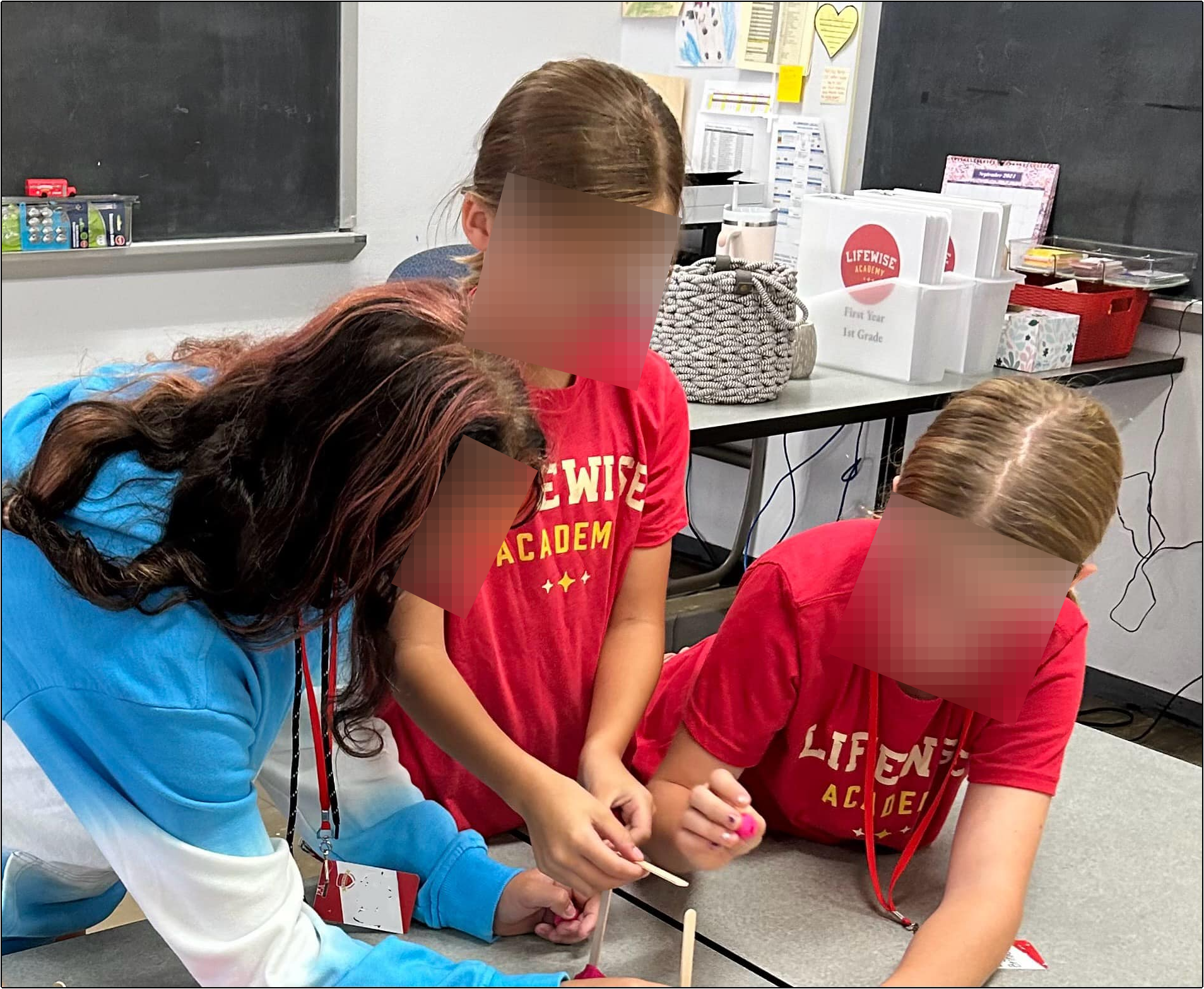
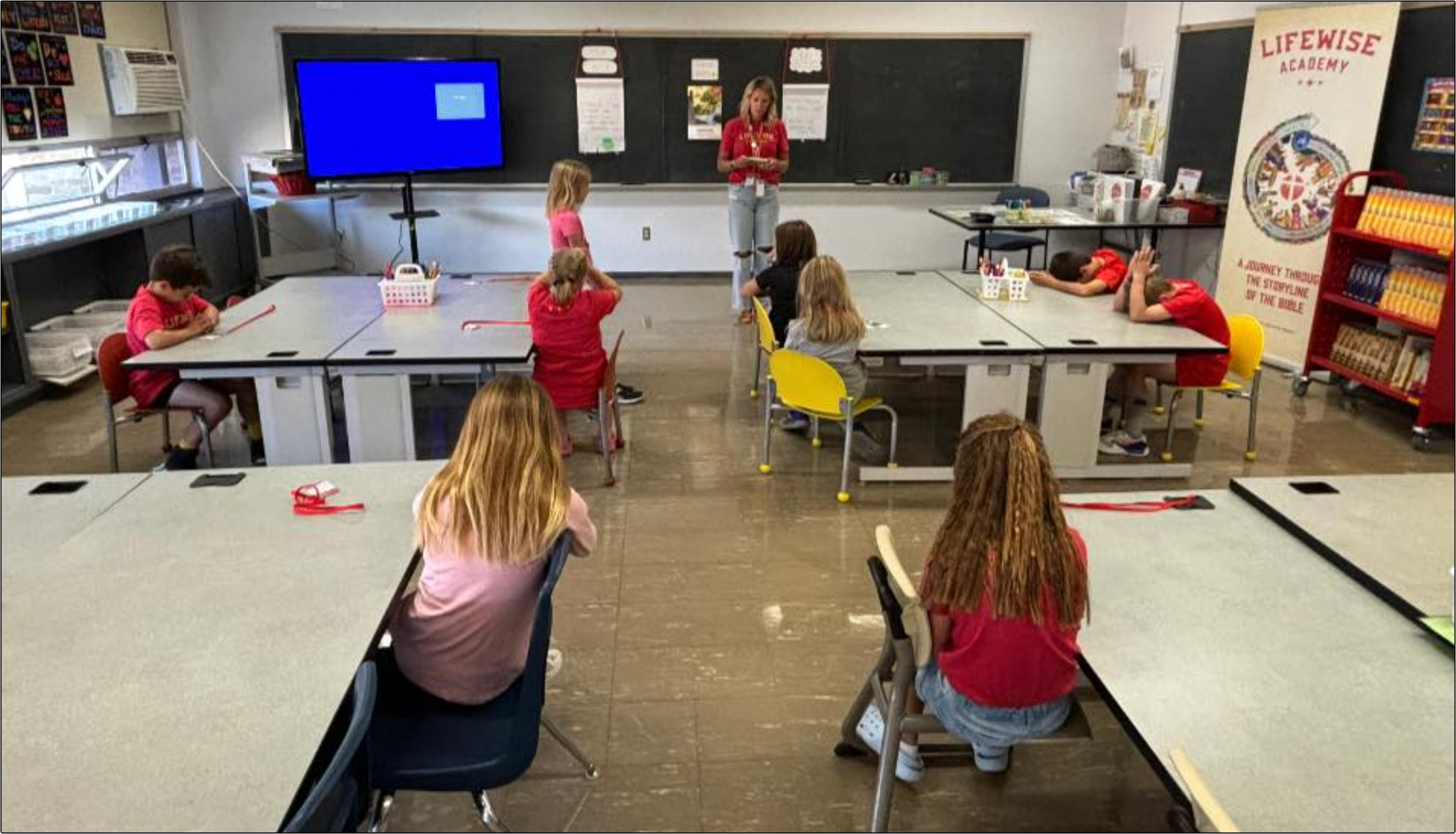
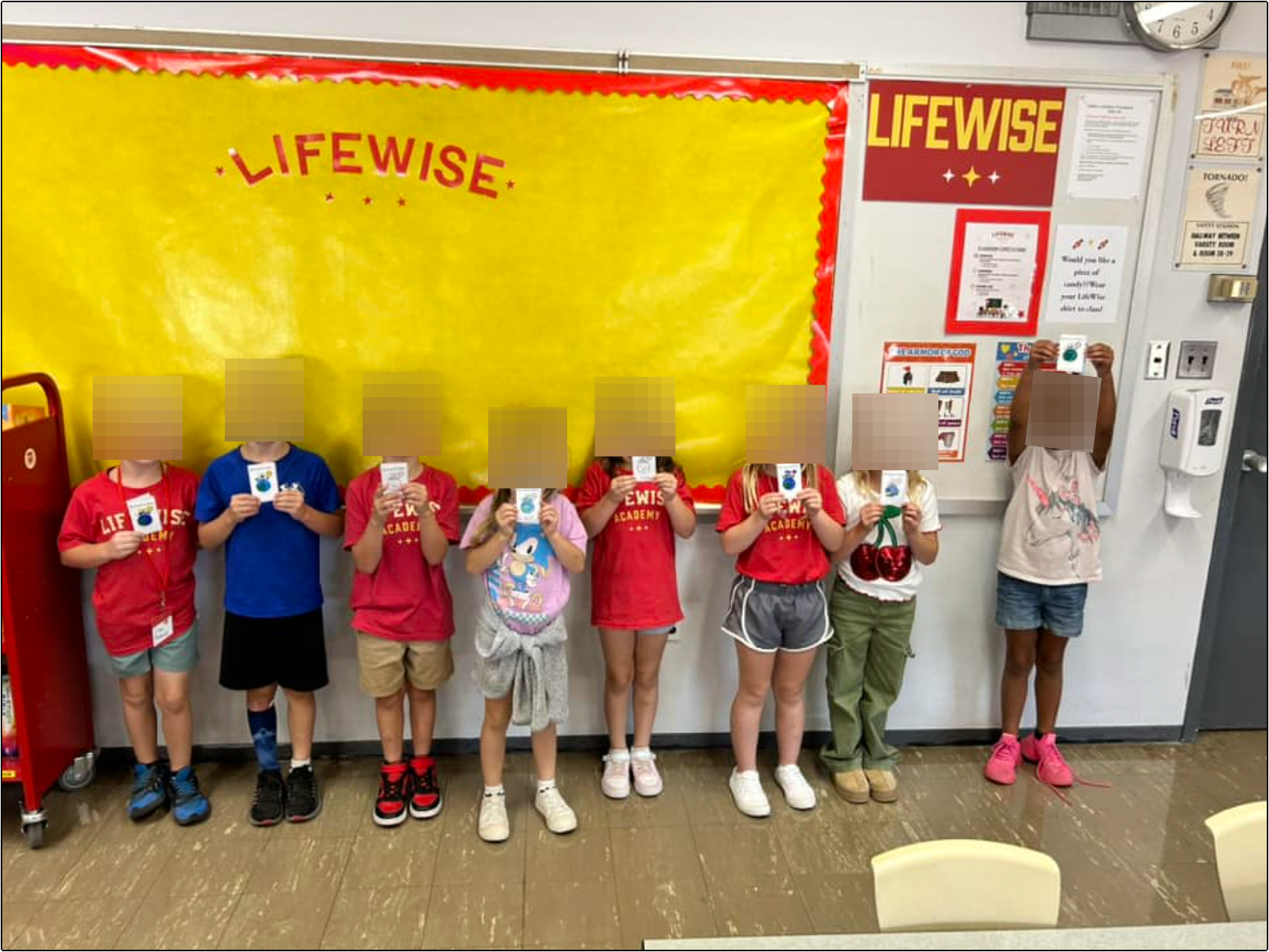
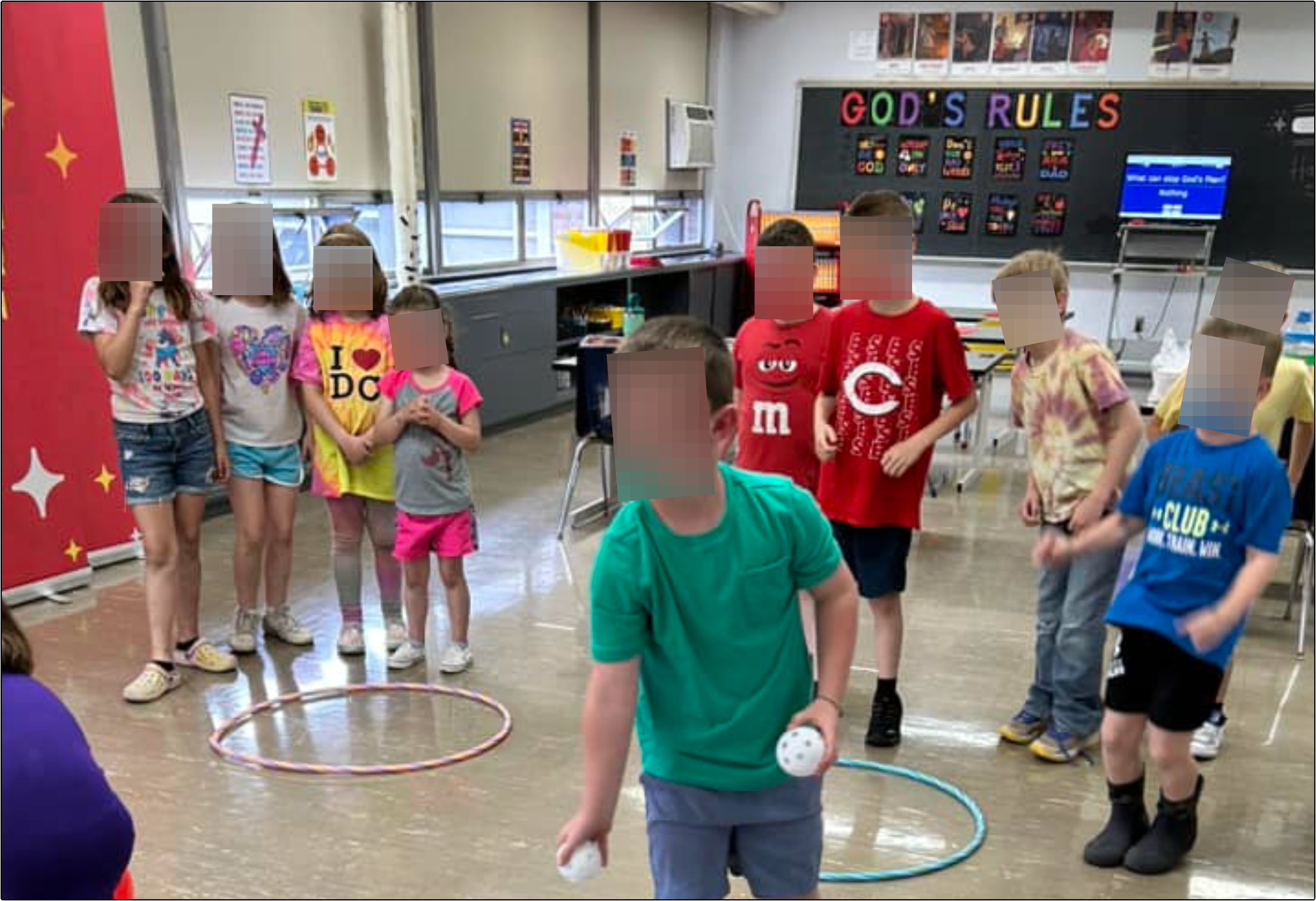
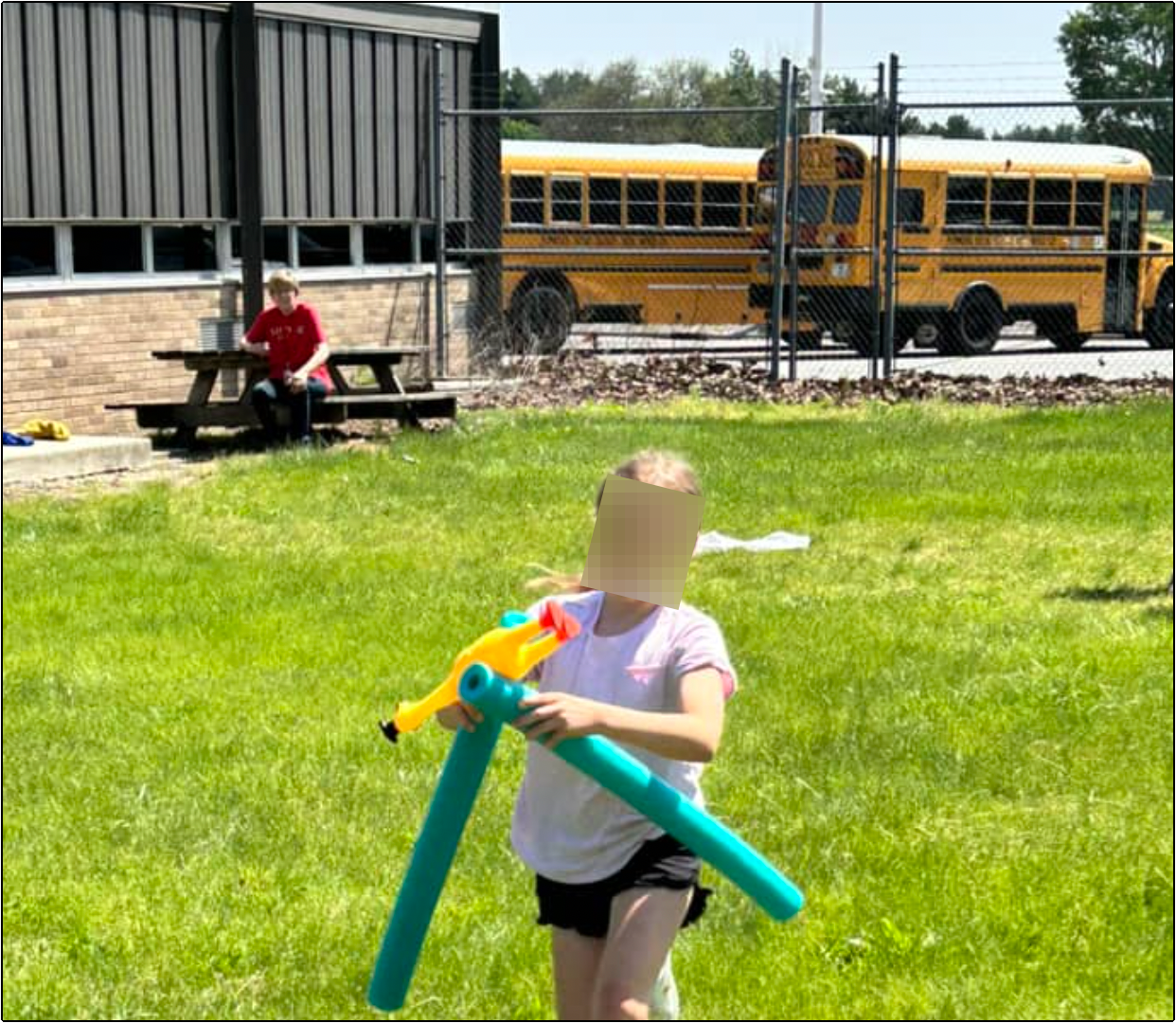
Just as their public school teachers have settled into and decorated their classrooms in Elmwood’s public school buildings — so have LifeWise teachers, as evidenced in the photos within this article.
Constitutionally required equal access does not allow for special access for LifeWise
The Constitution requires government neutrality toward religion — no exceptions.
Cases like Lamb’s Chapel and Good News Club ensure that religious groups cannot be excluded from public facilities that are open to everyone else.
But neutrality cuts both ways.
If Elmwood’s policy restricts community use of school facilities to non-school hours, allowing LifeWise to operate there during the school day is not equal access.
This is preferential treatment toward LifeWise Academy by Elmwood Local School District — no Supreme Court case authorizes that.